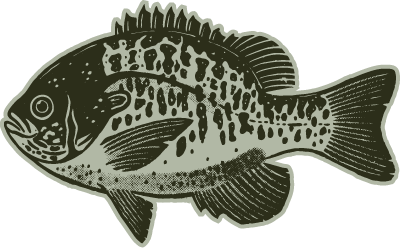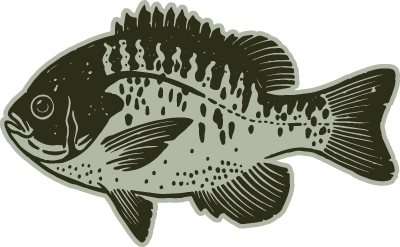
Bluegill are the workhorse of a balanced pond. They are the primary forage that grows your bass, and a fun panfish to catch in their own right. Nearly every stocking plan leans on them as a crucial fish.
The "regular" bluegill we sell are Northern bluegill, which is the standard strain that's well-suited to ponds across both the northern and southern United States. These are distinct from coppernose, which are a southern subspecies bred for fast growth in warm Florida waters but less tolerant of cold winters. For most pond owners, Northern bluegill are the dependable choice.
Bluegill spawn multiple times throughout the warm months, producing a steady supply of small fish that feed your bass. That prolific reproduction is exactly why you should include predatory fish when stocking Northern bluegill. Without something like bass to crop the young, bluegill overpopulate and stunt into a pond full of tiny fish. For this reason, if you have a smaller pond (1/2 surface acre or smaller), you may want to consider stocking our hybrid bluegill instead since their ability to reproduce is greatly diminished when stocked correctly.
Bluegill are opportunistic feeders. They eat insects and zooplankton and take pelleted feed eagerly. Pellet feed is the fastest way to grow bigger bluegill and, indirectly, bigger bass. With regular feeding, a bluegill can reach a hand-sized 8 inches or more when fully grown.
It's generally best for bluegill populations to get a head start on their growth and spawning before introducing predatory fish into your pond. Stock bluegill first (usually in fall or winter) at about ten bluegill per bass so the forage base is established before predators go in.