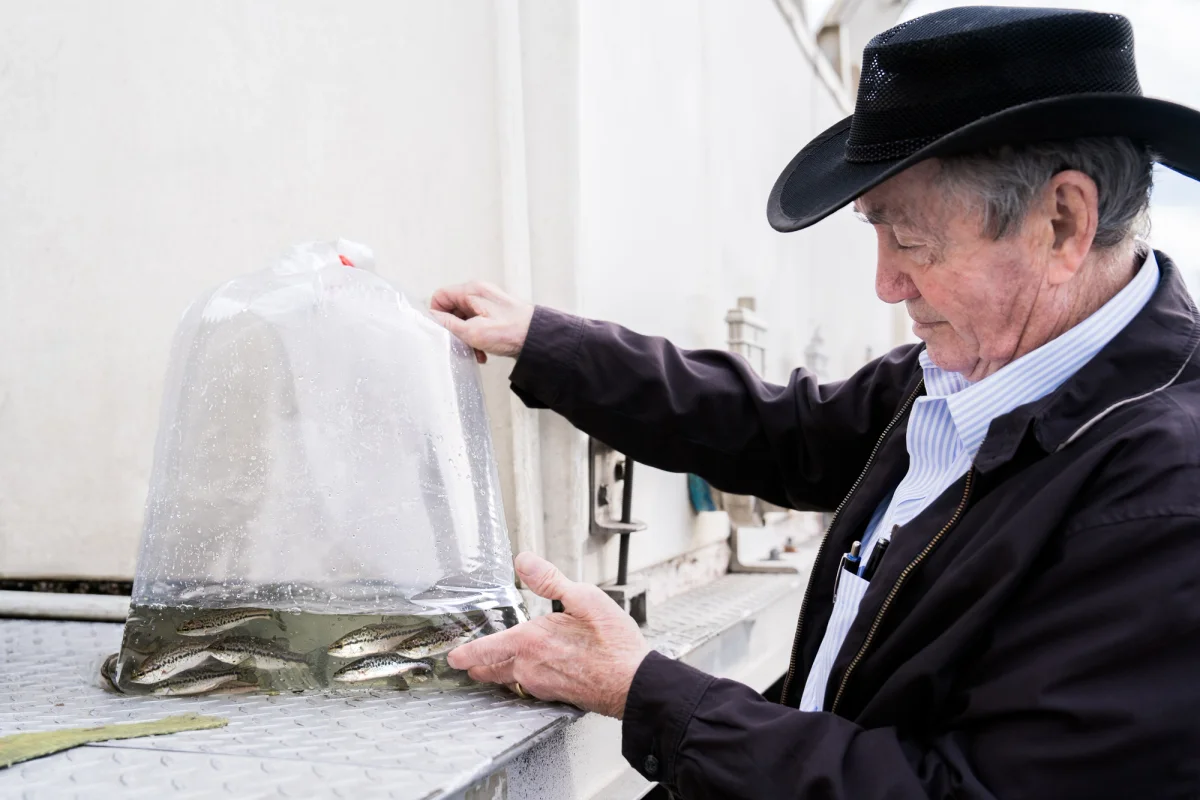
Stocking a pond means adding the right species, in the right order, in the right numbers. Done right, a new pond produces quality bass and bluegill fishing in a few years. Done wrong, and you'll spend those same years fighting an unbalanced pond.
If you're looking for the super simplified short version: stock forage fish first (northern bluegill and fathead minnows), add bass and (optionally) catfish the following spring, and aim for about ten bluegill for every bass. Avoid stocking crappie. For more details, see or stocking calculator:
That being said, the subject is far more complicated than the above two sentences let on, and if you want your pond to have long-term success, you should study up.
We have been stocking ponds for more than 30 years, and we guarantee every load we deliver. We travel to 20 states across 600+ locations every single year, so there's a good chance that we will have a Fish Day near you soon. To find your nearest Fish Day, use our Fish Day Finder:
Which fish to stock

The majority of our customers choose largemouth bass and bluegill, with redear sunfish and channel catfish rounding them out.
Other times, our customers choose hybrid bluegill over our regular northern bluegill. These hybrids grow larger and at a much faster rate than their counterparts. Roughly 90 percent of the hybrid bluegill offspring are male, so there's much less risk of overrunning a small pond. Although they reproduce far less, they are not sterile, and the few young they produce lose the size and growth traits of their parents. You should plan on restocking a portion of them every few years to keep the fishing where you want it. It is not a good idea to try to support a bass population with hybrid bluegill. Also worth noting, mixing any other type of bluegill with hybrid bluegill will almost instantly eliminate the benefit of their in-built population control.
Crappie are the species people ask for most and the one we most often talk them out of. They spawn heavily and unpredictably, and in a small pond neither the bass nor the anglers can keep up. Depending on which state agency you ask, the minimum recommended pond size runs anywhere from 3 to 30 acres, with 20 being a common answer. We've seen many of our customers successfully grow very large crappie in smaller ponds. However, be prepared to cut the dam and start over at some point, because it's only a matter of time until the population gets out of control unless you are very experienced in managing them.
If weeds are a concern, triploid grass carp are the standard non-chemical option. They're sterile, so they won't reproduce in your pond. Several states either ban them outright or require a permit, so check with us before you plan on them.
See every species we carry on our fish species page.
How do I figure out my pond's size?
The video below shows you how to measure surface acreage yourself, but we can also do this for you if you call us or message us. Feel free to reach out!
Example stocking rates for largemouth bass focused pond
Disclaimer: these are starting points for a very average new pond with no existing fish. Depth, water quality, forage, and fishing pressure can shift these numbers dramatically one way or the other. No two ponds are the same, but the vast majority of pond owners are successful in the stocking ranges listed below.
A supplemented pond, meaning one where you feed fish food pellets, fertilize the water, or both, can likely support twice as many fish, which is why its range runs about double. You'll hear this upper limit referred to as "carrying capacity", and it's typically measured in pounds of fish per acre.
| Species | No supplements | Supplemented |
|---|---|---|
| Largemouth Bass | 50–100 fish/acre | 100–200 fish/acre |
| Northern Bluegill | 500–1,000 fish/acre | 1,000–2,000 fish/acre |
| Redear Sunfish Optional | 150 fish/acre | 200 fish/acre |
| Channel Catfish Optional | 100 fish/acre | 300 fish/acre |
| Black Crappie * Optional | 50 fish/acre | 100 fish/acre |
| Fathead Minnows forage | 10 – 20 lbs/acre | |
* Black crappie overpopulate easily and take active management to keep in balance. If you’re new to pond management, you likely shouldn’t stock them in less than about 2 acres.
Largemouth Bass
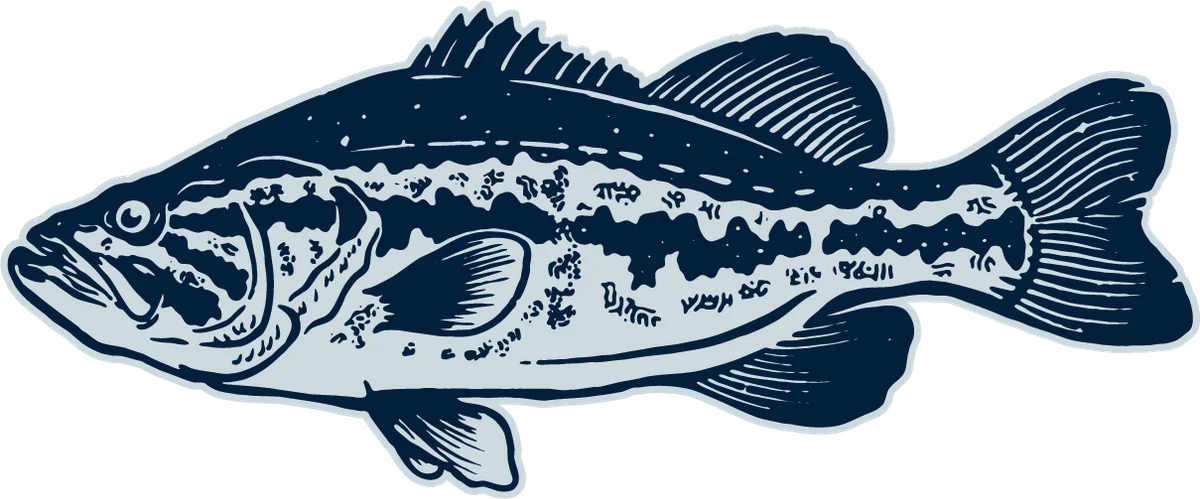
For the northern-strain largemouth bass in this example pond, the low end of the range grows fewer but larger fish, since fewer bass means less competition for the same forage. The high end gives you more fishing action, but you're going to see fewer of those monster-size bass above 8 pounds (if any). Your stocking rate only sets the starting point, though. What actually produces trophy bass is a strong forage base plus harvesting small bass every year once the population starts reproducing (this is called having a "harvest plan"). Most guidance says to leave the bass alone entirely for the first two to three years and let them establish before you start pulling any out.
One more thing on bass: strain matters as much as stocking rate if trophy fish are the goal. Northern-strain females top out around 10 pounds and the males rarely pass 5. Florida-strain and F1 cross bass have the genetics to go well past that. If you're chasing a wall hanger, ask us about strain before you worry about whether to stock 50 or 100 per acre.
Northern Bluegill
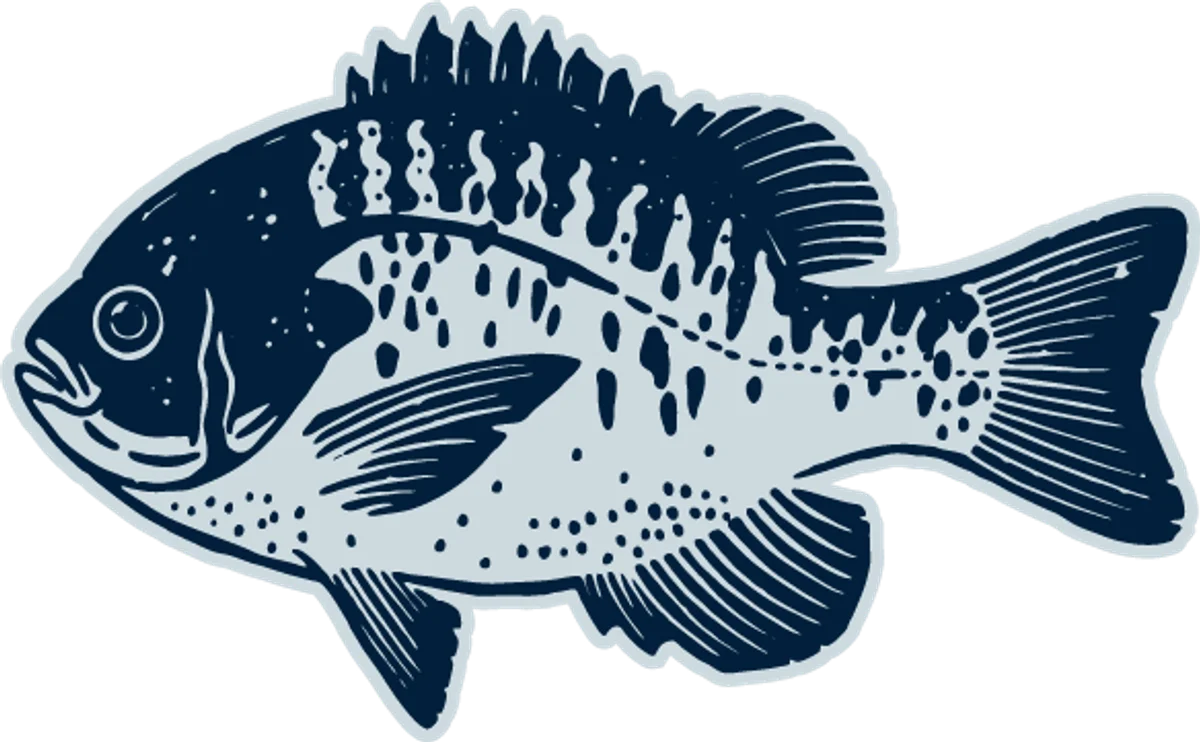
The northern bluegill in this example serves one purpose aside from fishing diversity: provide a full spectrum of different-sized prey for the bass, ranging from tiny bluegill fry and fingerlings, which feed juvenile bass, to full-grown adult bluegill, which provide more bluegill for the pond and are essential for feeding the big bass.
Fathead Minnows
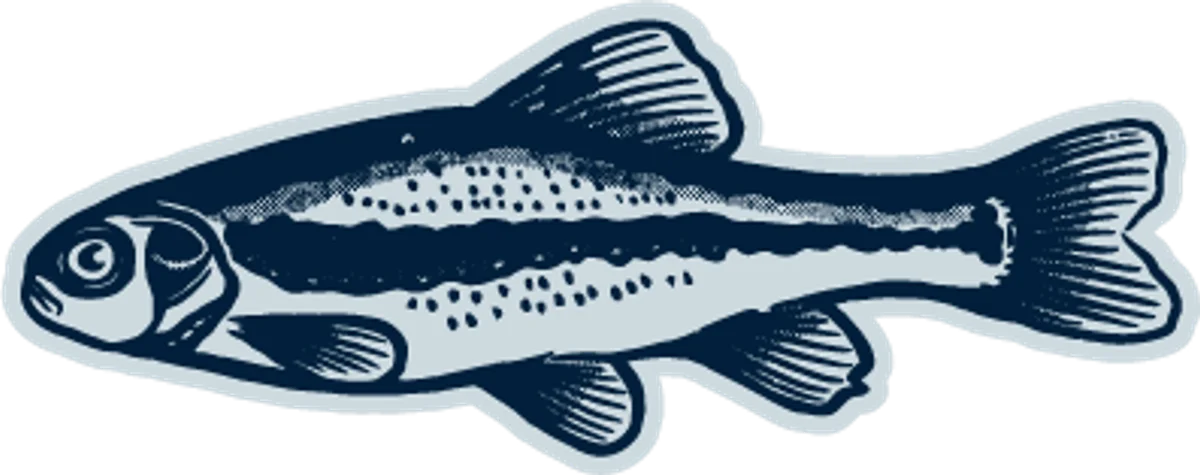
The fathead minnows are there to jump-start growth in your pond for the other fish that will eat them. They rarely grow above 3 inches, and their slow swimming and instinct to guard their young make them easy targets for other fish. This means that they won't maintain a sustainable year-over-year population and will likely deplete entirely from your pond at some point. Adding more later can help while your bass are still small or your forage base is thin, but understand what you're buying: in an established bass pond, minnows get eaten rather than establishing, so treat them as a short-term boost and not a standing forage population.
Redear Sunfish
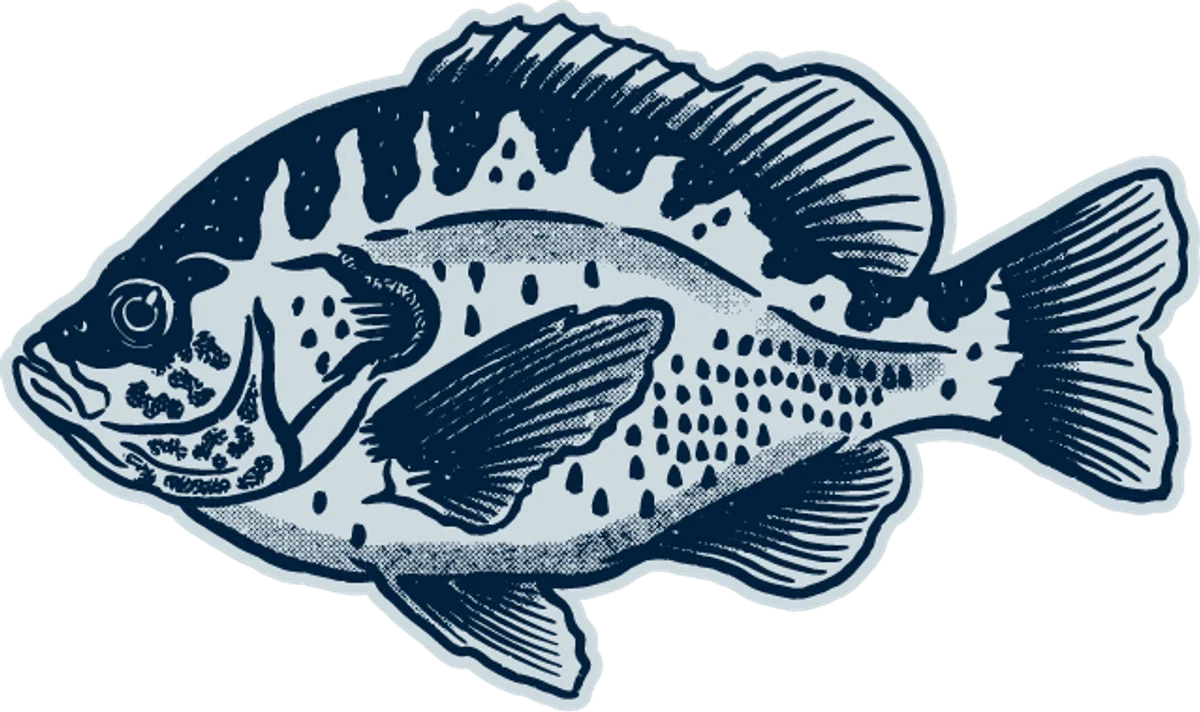
The redear sunfish is a supplemental fish in this example that helps combat parasites carried by small mollusks such as snails. This is why they're commonly called a "shellcracker". While not absolutely essential to the pond's long-term success, nobody likes to see parasites in their fish, and they provide even more fishing diversity. These fish will reproduce, and they commonly cross with the bluegill in your pond.
Channel Catfish
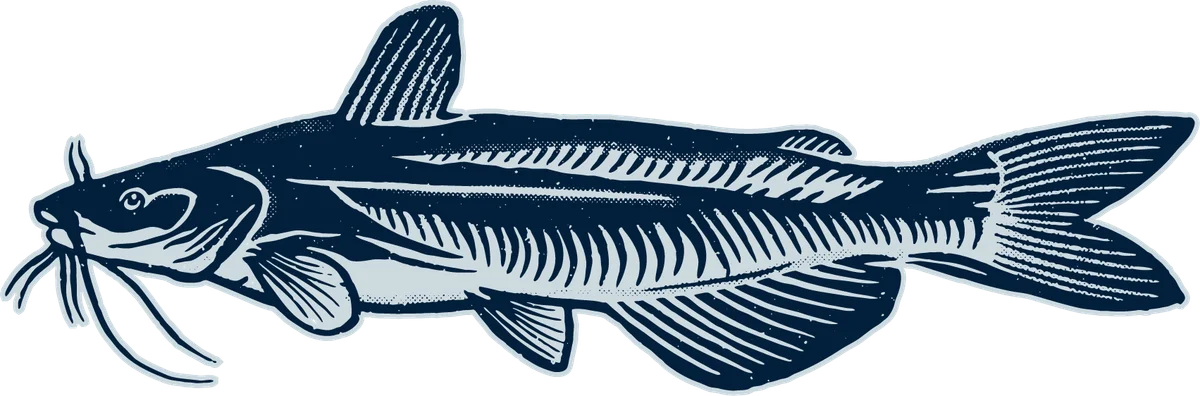
The channel catfish in this example provides another game fish for your pond and is arguably the best food fish. There are two things to know about them in this situation: first, catfish almost never reproduce successfully in a pond that has bass, because the habitat usually isn't conducive to spawning, and the bass eat the fry when it is. That's a good thing since they won't overpopulate, but it means you'll need to restock as you harvest them. Second, once catfish get large, they'll start competing with your bass for some of the same food. This is mostly a concern if you're dead-set on growing the biggest bass possible and have limited large forage. Keeping the catfish population low and harvesting them regularly takes care of that.
Additional Information
As a side note, a quarter-acre is about the smallest pond that will hold a balanced bass and bluegill population long term, and honestly anything under a half-acre is a stretch. Below that, you are better off with a single species you can feed with floating fish food, like channel catfish or hybrid bluegill.
Bodies of water over 10 acres are their own conversation, and you should contact us to get a more tailored plan.
This is only one example, and you have some options for different fish compositions for your pond. Our pond stocking calculator also runs Hybrid Bluegill plans (best for small ponds) and Channel Catfish plans. Get your example numbers →
When to stock a pond (and in what order)
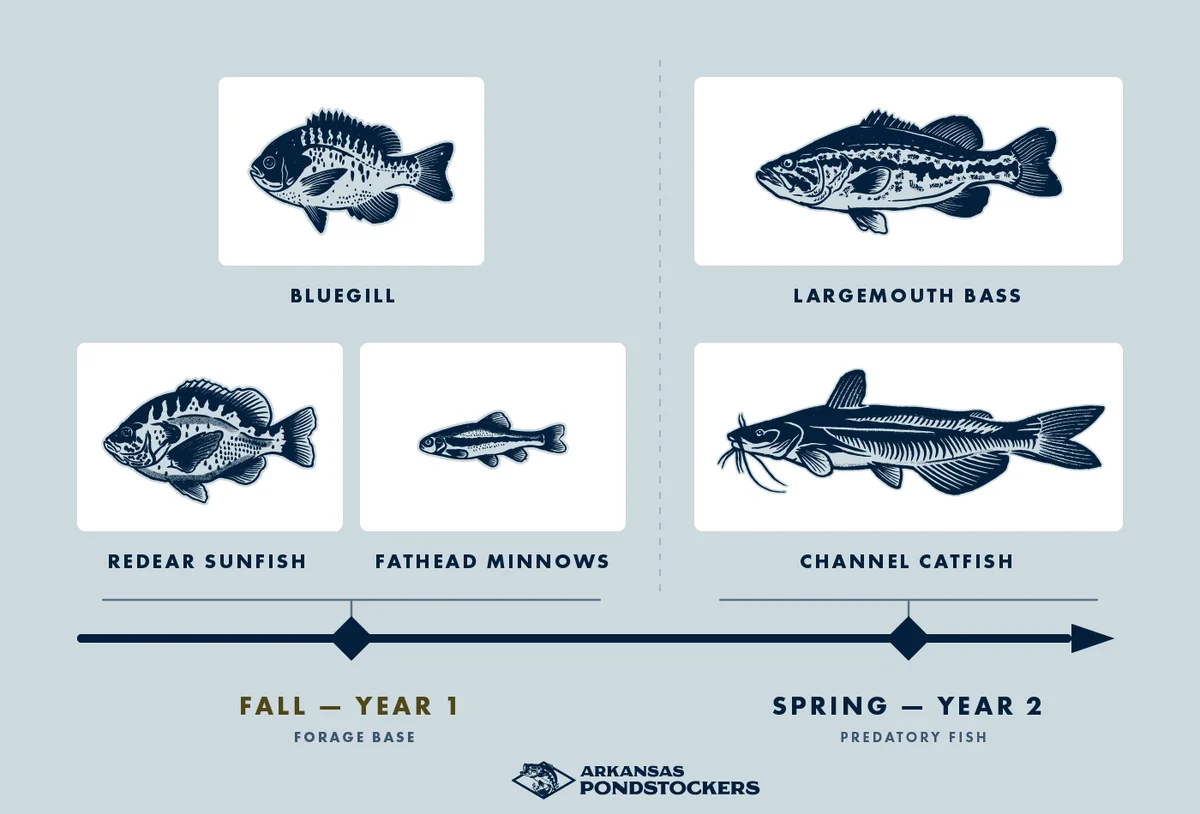
Typically, we recommend building the pond from the bottom of the food chain up. Stocking predators before there is enough forage is the most common way to end up with stunted fish. That being said, we have seen many of our customers over the years stock everything at the same time and have good results down the line. Your mileage may vary.
Year 1: forage. Stock bluegill, redear sunfish, and fathead minnows. The fatheads feed the pond immediately while the bluegill and redear establish and start reproducing.
Year 2 (or at least half a growing season): predators. Once the forage base is thriving, add largemouth bass and (optionally) channel catfish. Waiting a whole year is more likely to enable fast growth and quality bass. Make sure your catfish fingerlings are at least as large as your bass fingerlings, or the bass will eat them.
Stock forage fish in the fall or winter and predators the following spring. Cooler water is easier on the fish going in, and it gives your bluegill and redear a head start on spawning before the bass show up.
That's the age-old advice, but in practice, we've seen the calendar matter less than people expect. Plenty of folks stock forage in the spring and then predators that fall or the following spring. It works, and it gets you half a year closer to having a fishable pond. What matters more than the season is the order.
What it costs to stock a pond
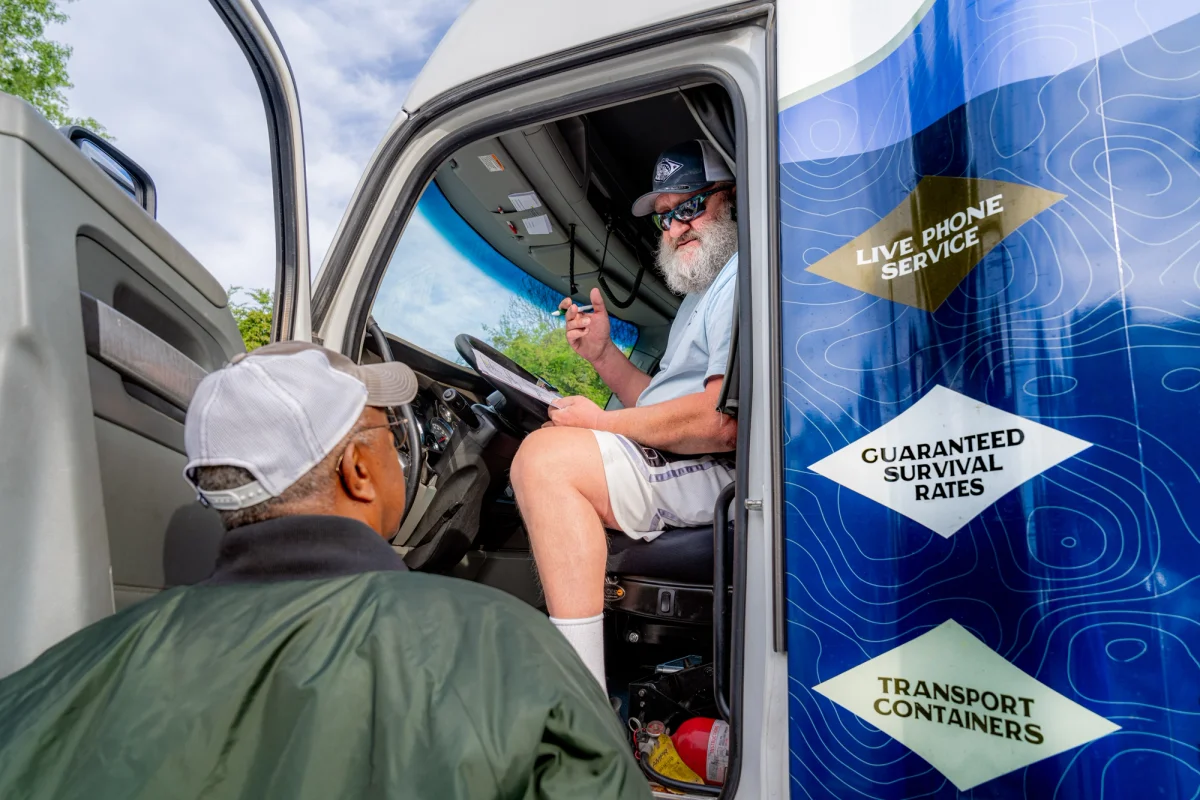
Cost comes down to species, quantity, whether you supplement, and delivery. Forage fish are a lower cost per fish but stocked in large numbers. Bass and catfish cost more per fish but are stocked in lower numbers.
Because we bring live fingerlings to co-ops and farm stores across the country, you skip the hatchery drive or the additional costs of on-site stocking services. Visit Find your Fish Day for current per-fish pricing in your area. Fully stocking a 1-acre pond typically has a maximum cost between $1,000 and $1,300, but may be much cheaper depending on your chosen rates and species.
Is your pond ready?
These rates assume a pond that:
- has no significant existing fish population
- averages 5 to 8 feet deep, with at least 3 feet at the bank and no more than 10 to 12 feet at the deepest point
- maintains healthy dissolved oxygen levels
- has water that is not harmful to fish (pH, toxins, disease, parasites)
- is not overrun with turtles, snakes, or fish-eating birds
Shallow ponds grow weeds and stunted fish. Very deep ponds stratify and are more prone to oxygen crashes. If your pond already has fish, call us and we will base the recommendation on what is in there now.
Keeping your fish healthy
Oxygen. Fish kills are almost always caused by low dissolved oxygen levels. The classic cause is turnover: a sudden cold rain or hard wind flips the pond in spring or fall, mixing oxygen-poor bottom water through the whole column and suffocating fish overnight. Hot still nights and algae die-offs do the same. Fish gulping at the surface at sunrise is the early warning. An aerator or fountain is the best insurance; run it overnight when oxygen is lowest. For very small ponds, avoid dumping large amounts of cold water, which can cause a mix.
Water color. Clear water looks nice, but this usually means an unproductive pond with very little plankton. You want a slight green tinge. Drop a white object in the water on a string, and you should lose sight of it somewhere between 18 and 24 inches down. That range is a healthy "bloom" of small organisms, which is feeding everything above it.
Gin-clear water can sometimes be corrected with fertilizer, but fertilization is a long-term commitment, not a one-time fix, and a lot of ponds in fertile soil never need it. Pea-soup water is the other extreme and can crash your oxygen. Call us either way before you buy anything.
Where do I go from here?
That's a great question! If you made it this far and you're looking for more information, feel free to reach out to us by phone, by messaging us on Facebook, or by clicking "Live Chat" in the bottom right corner of your screen. We're happy to help with any of your questions. There are also a lot of great sources out there for more information on platforms like YouTube and Facebook.
Thank you for reading!